Content Summary
- A Pivot Toward Real Food: The 2025–2030 Dietary Guidelines represent a “historic reset,” moving away from pharmaceuticals and back toward whole, nutrient-dense foods. Notable updates include a higher daily protein target ($1.2$ to $1.6$ g/kg) and the first-ever explicit warning against ultra-processed foods.
- Alignment with SOUL Principles: Bauman College notes that many of these updates mirror its long-standing SOUL philosophy (Seasonal, Organic, Unprocessed, Local), celebrating the government’s firmer stance on added sugars and the shift toward bio-individualized, metabolic-focused nutrition.
- Advocating for Quality and Transparency: While the guidelines are a step forward, the post emphasizes the need for deeper education on food quality (pasture-raised, organic) and food additives. It also encourages a critical lens regarding industry conflicts of interest in federal policy.
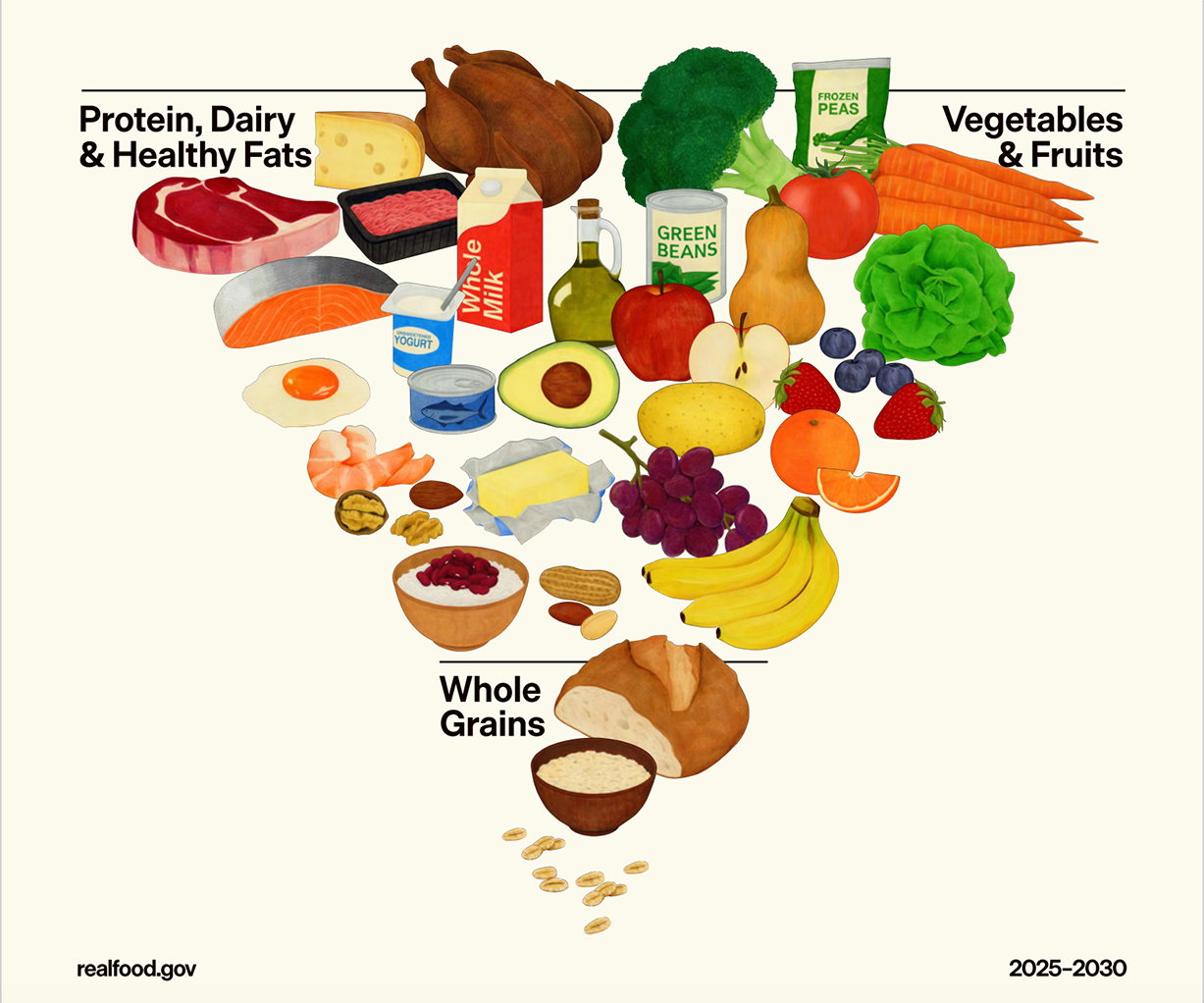
Recently, the Dietary Guidelines for Americans (DGA) 2025–2030 were released. These updates show how nutrition policy continues to evolve in the right direction and, although not perfect, more closely align with the principles of holistic nutrition than previous versions.
“Better health begins on your plate—not in your medicine cabinet. The new Dietary Guidelines for Americans defines real food as whole, nutrient-dense, and naturally occurring, placing them back at the center of our diets.”
What Are the Dietary Guidelines for Americans?
The DGA are the U.S. government’s official nutrition recommendations, updated by the U.S. Department of Agriculture (USDA) and the Department of Health and Human Services (HHS). They help shape:
- Public health policy.
- Federal nutrition programs such as school meals, elderly nutrition services, and more.
- Nutrition education and research priorities across the country.
The Key Takeaways
These updated guidelines place a stronger emphasis on whole, real foods. Hurrah!
Much of this will feel familiar to our Bauman College community since these recommendations reflect what we have long taught through Eating for Health (E4H), food-first, and the SOUL philosophy: Seasonal, Organic, Unprocessed, and Local foods. In other words: whole-foods nutrition.
Key Themes from the 2025–2030 Dietary Guidelines
These guidelines shift toward whole-nutrition principles, including:
- Whole, minimally processed foods as the foundation
Meals are encouraged to center on real foods with an emphasis on nutrient density. - Protein as a central building block
Adequate, high-quality protein is emphasized across meals with the recommended amount increasing to 1.2 to 1.6 g of protein per kg of body weight per day. A stark increase from the previous long standing 0.8 g/kg body weight per day. - Clear guidance to limit ultra-processed foods
Highly processed, ready-to-eat foods are explicitly discouraged due to scientific research showing their links to multiple diseases. - Stronger limits on added sugars
A firmer stance on avoiding added sugars, particularly for children. - A more balanced view of dietary fats
Avoidance of the rigid low-fat messaging to support the inclusion of healthy fat sources. - Whole carbohydrates versus refined options
Whole, fiber-rich foods are prioritized over refined grains and packaged carbohydrate products. - Support for metabolic health and prevention
Focus moves towards metabolic resilience and disease prevention rather than reactive intervention. - Bio-individualized approaches
Acknowledgement that lower-carbohydrate patterns may be beneficial for some individuals, especially those managing chronic conditions – an important step toward personalized nutrition.
Why This Matters
As these guidelines shape food environments far beyond individual kitchens, they also create new opportunities for our graduates to support health at a broader, systemic level.
While we see much of what Bauman College has been teaching since our founding in 1989 echoed in these guidelines, we strive to continue to be and to create leaders in nutrition and culinary spaces that drive better health in our communities.
In order to do that, we must continue to share our vision of nourishment and look deeper into the details of the guidelines to highlight what is missing or confusing.
What Else Should Be Included in the Guidelines?
Quality is key: We believe that when choosing products food quality matters. Meat and dairy that is grass-fed, pasture-raised, and/or organic impacts nutritional markers which affect health outcomes. We need to continue to educate people about food selection and support farmers and purveyors who understand the value of selling produce and livestock without harmful chemicals and pesticides.
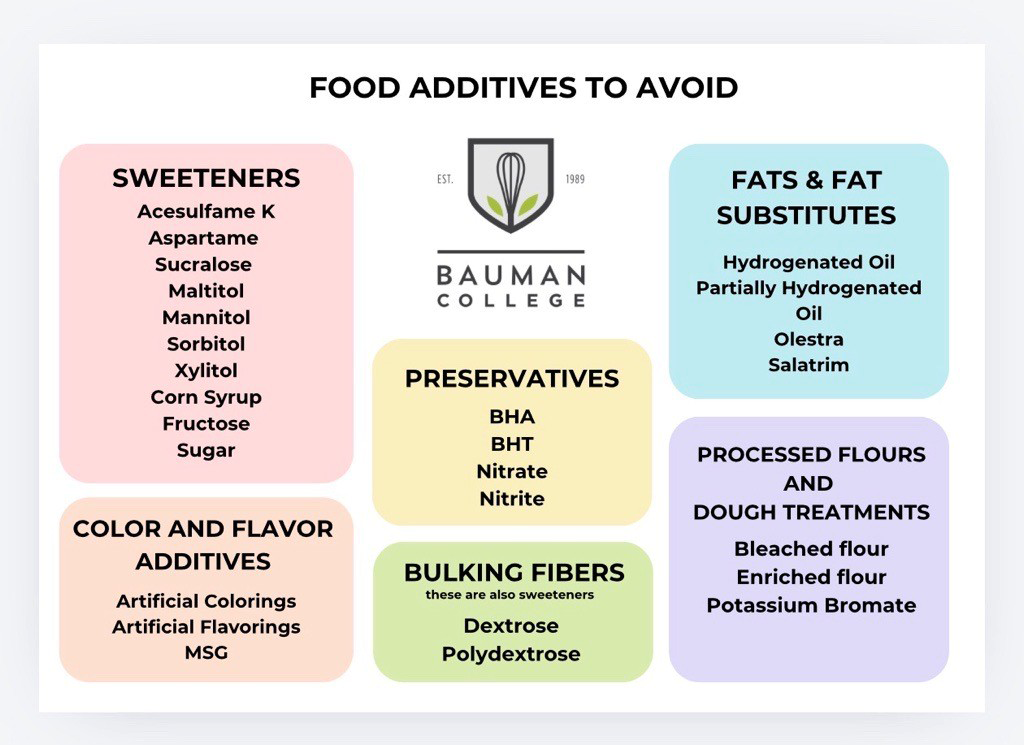
Food Additive Education: We need to provide more guidance around food additives and ingredients to be avoided in processed foods. Without clear standards, ultra-processed foods which stimulate overeating and lack nutrient density could technically fit into food group recommendations under the current guidelines.
Clear lists such as this chart of Food Additives to Avoid from Bauman College could help people and organizations make better choices.
Limiting Red Meat and Dairy Consumption: We believe that an omnivorous diet benefits many people and that moderate amounts of high-quality meats and dairy can be nourishing for those who can tolerate these foods. We caution that over consumption of red meat and unfermented dairy can be inflammatory and out of alignment with our integrative health perspective.
Conflicts of Interest: The guidelines were developed by experts with financial ties to the beef and dairy industries. At Bauman College, we encourage students to critically evaluate sources, including who funds and develops them, and to consider where potential conflicts of interest may exist. We invite our community to apply the same critical lens when reviewing these guidelines.
Looking Ahead
As nutrition science continues to evolve, thoughtful dialogue remains important. Setting aside the politics helps highlight the meaningful progress in these updates, which increasingly reflect principles long emphasized in holistic nutrition. Again, it’s not perfect, but progress is progress.
Our programs prepare graduates to become professional, credible, and confident guides in holistic nutrition, able to discern what’s evidence-based (and what’s misinformation) in a constantly shifting food landscape. Using a whole-foods framework, our students build the skills to make targeted, practical recommendations for diet, nutrients, and lifestyle habits—and help people implement them through everyday choices and sustainable behavior change.
Why Holistic Chefs and Nutrition Consultants are More in Demand Than Ever
People want actionable wellness support, not generic advice, especially as prevention-focused health choices, “better-for-you” food, and sustainability continue to shape what consumers and organizations seek. At the same time, the broader coaching and wellness services space is expanding and creating more need for practitioners who can translate nutrition into practical plans (Nutrition Consultant) and real meals and routines (Holistic Chef). Bauman College’s two career track online programs reflect that reality: training you to help others through conscious eating, earth-friendly living, and healthy lifestyle choices, with the education and support to build a rewarding career.
Have Work You Love
Learn more about Bauman College’s Online Nutrition Consultant and Holistic Chef Programs. Contact us to connect with an Admissions Representative today.