Content Summary
Bauman College Holistic Chef Program Manager Carrie Bonfitto explores the distinct professional frameworks of traditional culinary roles versus holistic culinary arts. The article highlights how a holistic chef merges classic technique with bio-individual, health-supportive nutrition and introduces the value of completing both of Bauman College’s programs as the premier pathway for modern, purpose-driven culinary professionals.
- The Power of the Lens: Comparing the kitchen focus of traditional chefs (service, consistency, concept) with holistic chefs (nourishment, digestion, therapeutic modifications).
- A Holistic Scope of Work: Examining the diverse career landscapes for holistic culinary professionals, from private homes to behavioral health facilities.
- Culinary Skill Meets Science: Deconstructing why elite professional culinary skills remain vital when working with health-supportive, alternative ingredients.
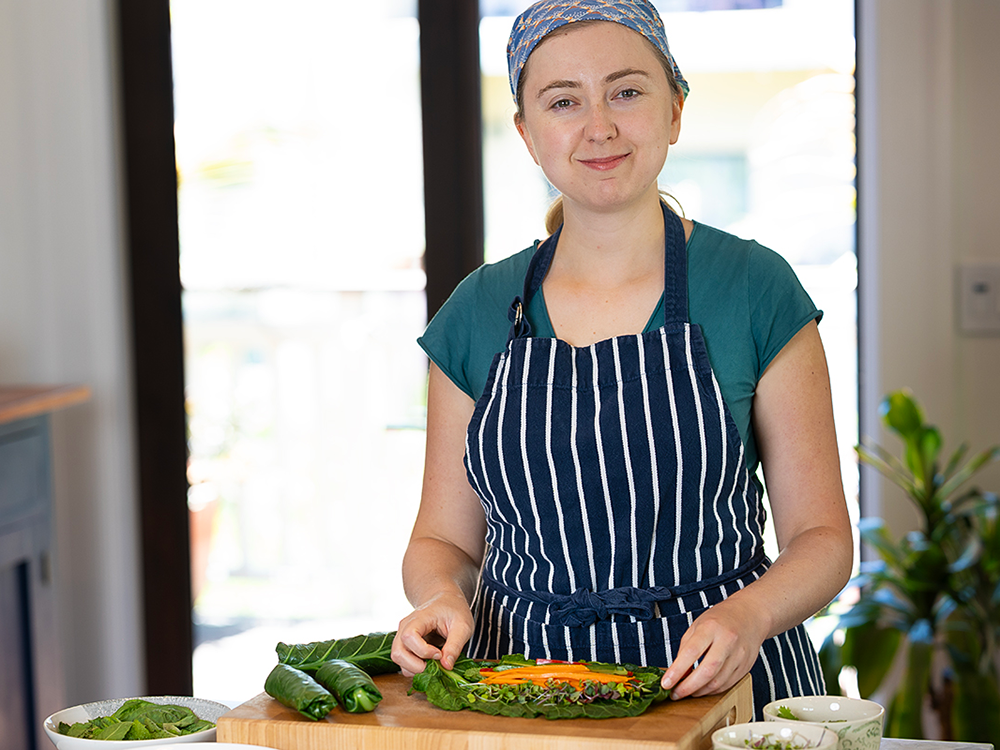
Food can do more than satisfy hunger. It can comfort, energize, celebrate, connect, and nourish. For people who feel called to work with food professionally, there are many career paths to explore, from restaurant kitchens and hotels to private chef services, wellness retreats, meal prep businesses, corporate wellness programs, and nutrition-focused culinary careers.
Two career paths that are often compared are the regular chef and the holistic chef. Both roles require culinary skill, creativity, organization, and a passion for preparing delicious food. The biggest difference is the lens each chef brings to the kitchen.
A regular chef typically focuses on preparing and presenting food in restaurants or other food-service settings. A holistic chef brings culinary technique together with nutrition-centered food preparation, helping clients eat in ways that support their lifestyle, preferences, dietary needs, and wellness goals.
At Bauman College, the Holistic Chef program is designed around this whole-person approach to culinary training. Students learn traditional culinary techniques, alternative ingredients, nutrition-based philosophies, entrepreneurial skills, and health-supportive cooking through a 12-month, 100% online program with an externship.
What Does a Regular Chef Do?
A regular chef, often called a chef or head cook, is responsible for overseeing daily food preparation in restaurants and other places where food is served. According to the U.S. Bureau of Labor Statistics, chefs and head cooks direct kitchen staff, plan menus, order supplies, develop recipes, ensure meal quality, and manage food-related concerns.
Depending on the workplace, a regular chef may:
- Plan menus
- Develop recipes
- Supervise cooks and kitchen staff
- Order ingredients and supplies
- Manage inventory and food costs
- Ensure food quality and consistency
- Maintain kitchen cleanliness and safety standards
- Prepare or oversee dishes during service
Regular chefs often work in restaurants, hotels, catering companies, resorts, cafeterias, and other food-service establishments. The work can be fast-paced, physically demanding, and centered on timing, consistency, presentation, flavor, and customer satisfaction.
What Does a Holistic Chef Do?
A holistic chef also prepares delicious food, but their work is guided by a broader question: How can food support the whole person?
Holistic chefs often consider nutrition, digestion, dietary restrictions, ingredient quality, personal preferences, lifestyle, and wellness goals when creating meals. Their work may include cooking for clients with food sensitivities, creating menus around specialty diets, preparing nutrient-dense meals, or helping individuals and families enjoy food that is both flavorful and supportive.
Bauman College’s Holistic Chef program blends classic culinary school techniques with a personalized, person-centered approach to wholesome eating. The program teaches students how to craft menus based on client lifestyles, tastes, and dietary requirements while also developing flavor, texture, visual appeal, kitchen operations, and business skills.
Holistic chefs may work as:
- Personal chefs
- Private chefs
- Wellness retreat chefs
- Rehabilitation center chefs
- Behavioral health facility chefs
- Private caterers
- Meal prep chefs
- Community kitchen chefs
- Health-supportive recipe developers
- Culinary entrepreneurs
- Chefs for clients with specific dietary preferences or needs
Bauman College notes that graduates may work in a wide range of settings, including restaurants, hotels, cafés, food trucks, wellness and retreat centers, catering and corporate kitchens, community centers, schools, senior centers, and hospitals.
Holistic Chef vs. Regular Chef: Feature Comparison
| Feature | Regular Chef | Holistic Chef |
| Primary focus | Food quality, flavor, presentation, service, and kitchen operations | Food quality, flavor, nutrition, wellness, and individual dietary needs |
| Common work settings | Restaurants, hotels, resorts, catering companies, cafeterias, food-service establishments | Private homes, meal prep businesses, wellness retreats, health-focused catering, corporate wellness, community settings, holistic culinary businesses |
| Menu planning | Based on cuisine, customer demand, seasonality, cost, restaurant concept, and kitchen capacity | Based on lifestyle, preferences, nutrition goals, food sensitivities, specialty diets, and whole-food principles |
| Ingredient approach | Uses ingredients that fit the menu, cuisine, budget, and customer expectations | Often emphasizes whole, seasonal, nutrient-dense, minimally processed, and alternative ingredients |
| Client relationship | Often serves many customers through a restaurant or food-service model | Often works more personally with clients and their dietary preferences, restrictions, or wellness goals |
| Special diets | May accommodate allergies or dietary requests | Often specializes in gluten-free, dairy-free, plant-based, low-sugar, anti-inflammatory, or other specialty diets |
| Training emphasis | Culinary technique, food safety, menu planning, service, purchasing, inventory, and kitchen management | Culinary technique plus nutrition-centered cooking, alternative ingredients, specialty diets, person-centered menu planning, and entrepreneurship |
| Career direction | Restaurant chef, sous chef, executive chef, catering chef, hotel chef, food-service chef | Personal chef, private chef, holistic meal prep chef, wellness chef, health-supportive caterer, clinical culinary specialist, culinary entrepreneur |
The Biggest Difference: Culinary Art Meets Nutrition
The biggest difference between a holistic chef and a regular chef is not whether one makes better food. Both can create beautiful, flavorful, and satisfying meals. The difference is in the purpose and framework behind the food.
A regular chef may design a menu around cuisine, service style, restaurant concept, cost, seasonality, and customer demand. A holistic chef considers many of those same elements while also asking how the meal can support nourishment, balance, digestion, energy, and individual needs.
For example, a regular chef might create a creamy pasta dish using traditional dairy, refined pasta, and classic technique. A holistic chef might create a similar comfort-food experience using gluten-free pasta, cashew cream, seasonal vegetables, herbs, and ingredients chosen for both flavor and nutrient density.
Both dishes can be delicious. The holistic version is created with an added focus on whole-food ingredients, dietary awareness, and personalized nourishment.
Why People Choose the Holistic Chef Path
Many students are drawn to holistic cooking because they want their culinary work to feel meaningful. They may love cooking, but they also want to help others feel cared for, energized, and supported through food.
A holistic chef career may be a strong fit for someone who enjoys:
- Cooking with whole-food ingredients
- Learning about nutrition and wellness
- Supporting clients with dietary restrictions
- Creating meals that are both nourishing and flavorful
- Working one-on-one with individuals or families
- Building a food business with a wellness focus
- Helping people develop a more positive relationship with food
At Bauman College, the Holistic Chef curriculum includes kitchen courses such as Holistic Chef Fundamentals, Knife Skills + Culinary Techniques, Foundational Ingredients, Pastry Arts + Alternative Baking, Cooking for Health, and Specialty Diets. The program also includes culinary career courses in Business, Externship, and a Chef’s Table Event.
Why People Choose the Holistic Chef Path
Yes. A holistic chef is still a chef.
Nutrition knowledge alone is not enough. Holistic chefs need strong culinary foundations, including knife skills, cooking methods, flavor development, recipe testing, kitchen organization, food safety, menu planning, and presentation.
The difference is that those culinary skills are used alongside nutrition-centered thinking. A holistic chef must know how to make health-supportive food taste satisfying. That means understanding herbs, spices, acids, fats, textures, colors, cooking times, substitutions, and ingredient functionality.
It also means being able to adapt recipes for clients who may avoid gluten, dairy, refined sugar, eggs, soy, or other common ingredients. Holistic cooking is not about restriction. It is about creativity, personalization, and nourishment.
Is a Holistic Chef the Same as a Nutritionist?
No. A holistic chef and a nutrition professional may share an interest in food and wellness, but they are not the same role.
A holistic chef focuses on preparing food. They may use nutrition principles to guide meal planning and ingredient choices, but their work is primarily culinary.
A nutrition consultant or nutrition professional may focus more on nutrition education, client guidance, food and lifestyle assessment, and wellness planning, depending on their education, credentials, and scope of practice.
Which Career Path Is Right for You?
Choosing between a regular culinary path and a holistic culinary path depends on the kind of impact you want to make.
A traditional chef path may be right for you if you are excited by restaurant service, team-based kitchen leadership, fast-paced environments, and creating memorable dining experiences for a wide range of guests.
A holistic chef path may be right for you if you want to use food as a tool for nourishment, personalization, and wellness. This path may appeal to people who want to work more closely with clients, create health-supportive menus, accommodate specialty diets, or build a culinary business rooted in whole-food nutrition.
The Bauman College Approach
Bauman College’s approach to culinary education expands beyond traditional restaurant training. The one-year Holistic Chef program prepares students to nourish themselves and others through culinary arts, while developing the business and practical skills needed for careers inside and outside the kitchen.
Final Thoughts
Regular chefs and holistic chefs share a love of food, technique, and creativity. The difference is in the lens they bring to the kitchen.
A regular chef often focuses on creating excellent food for a restaurant, hotel, catering company, or food-service operation. A holistic chef focuses on creating excellent food that also supports the individual needs, preferences, and wellness goals of the people they serve.
For those who believe food can be both delicious and deeply nourishing, becoming a holistic chef can be a meaningful way to turn a passion for cooking into work that supports the health and happiness of others.
Have Work You Love
Learn more about Bauman College’s Online Nutrition Consultant and Holistic Chef Programs. Contact us to connect with an Admissions Representative today.