Content Summary
Bauman College graduate Lauren Bryson, NC, BCHN®, shares her professional evolution since graduating in 2020. This follow-up spotlight explores how she balances her private functional nutrition practice, Lauren Emerson Wellness, with her role as Diggin’ Education Manager at the Agricultural Institute of Marin, revealing the profound biological links between soil biodiversity and human gut health.
- The Path to Root-Cause Wellness: Lauren’s personal battle with autoimmune gastritis and her journey out of chronic inflammation.
- The Bauman Foundation: How a science-based, therapeutic curriculum built her clinical confidence and public speaking skills.
- Clinical Data Meets Foundations: Utilizing GI-MAP functional testing while prioritizing sleep, hydration, and movement.
- A Holistic Food System: Why regenerative agriculture, seasonal eating, and local farmers markets are essential for community health.
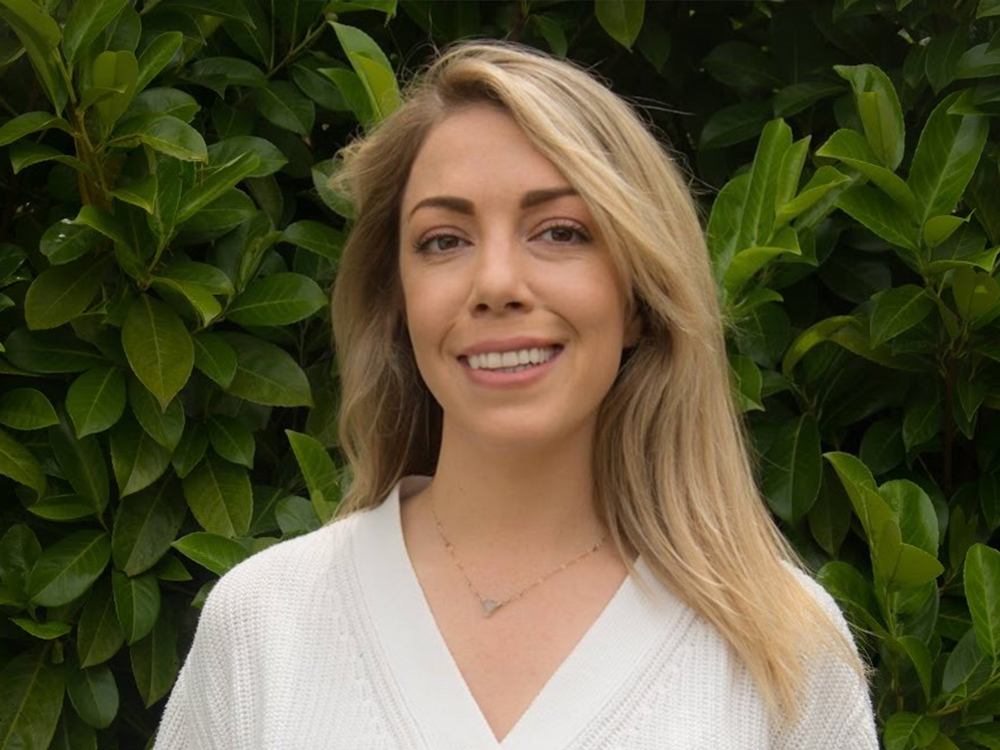
Lauren Bryson, NC, BCHN®, is a 2020 Bauman College graduate, Board Certified in Holistic Nutrition® through NANP, and the founder of Lauren Emerson Wellness, a functional nutrition practice specializing in gut health. Through her work, Lauren blends holistic health coaching with functional lab testing to support clients using a personalized, root-cause approach.
In addition to her private practice, Lauren is the host of Go Play in the Dirt, a podcast exploring the connections between biodiversity, soil health, the gut, and overall well-being. She also serves as the full-time Diggin’ Education Manager at the Agricultural Institute of Marin (AIM), where she leads farmers market tours, farm tours, and classroom visits that connect students with local food systems, seasonal produce, and the farmers who nourish our communities.
The Path to Holistic Nutrition
My path into nutrition started with my own health journey. Before coming to Bauman College, I had a bachelor’s degree in psychology and was living and working in San Francisco as a project manager. In my twenties, I was struggling with a long list of gut-related symptoms like bloating, fatigue, nutrient deficiencies, and more symptoms that just kept popping up.
For over a decade, I felt like I was being shuffled around the Western medical system with little to no answers. I was misdiagnosed, overprescribed, told nothing was wrong with me, and all the while, my symptoms continued to get worse.
Eventually, I was diagnosed with autoimmune gastritis, a chronic inflammatory condition in the stomach. At the time, it felt like the end of the world. But looking back, it was really the beginning of everything.
I started doing my own research into food, gut health, and lifestyle changes. I began adding in small shifts, and slowly, I started to see improvements in my health. It wasn’t an overnight transformation, but it was sustainable. I realized there was really something to this work. That experience is what led me to holistic nutrition.
Why Bauman College
When I decided to go back to school, I looked at a couple of programs, but Bauman College really stood out to me. I loved that Bauman College’s curriculum was science-based while still taking a holistic approach. I loved the food demos, the physiology, and the way the program built from foundations into therapeutics.
The foundations were key. You need to understand what is actually going on in the body before you can support someone well. Then we moved into therapeutics, like ways to support the cardiovascular system, gut health, and other areas through nutrition and lifestyle.
I also really appreciated the practice we got with presenting in class. Public speaking can be scary, but having that experience helped me build confidence. Today, teaching is such a big part of my work, and Bauman helped me start developing those skills.
Starting After Graduation
I graduated in 2020, right in the middle of the pandemic, and I remember thinking, “What do I do now?”
I started teaching part-time with a local nonprofit called Kids Cooking for Life. We taught hands-on cooking classes for kids and made things like rainbow mac and cheese, fluffy pumpkin pancakes with apple compote, and other recipes that helped make healthy food fun and approachable.
At the same time, I started slowly building my business. I didn’t have a business background, so I was learning as I went. I built my website, filed my LLC, offered free talks in the community, and started working with clients one-on-one.
Those first clients were so helpful. Every client experience taught me something new. In the beginning, things felt a little clunky, but that is how you build confidence. You start to learn what systems work for you, how you want to take client notes, how you want to write reports, and how you want to support people. My first clients came mostly through word of mouth. That is still how most people find me today.
Finding My Niche in Gut Health
From the beginning, I knew gut health was my niche because that was such a big part of my own story. At first, I worked with a wide range of clients, but over time, I narrowed my focus. Eventually, I realized my ideal client was a lot like me in my thirties — women dealing with gut health issues who are frustrated, overwhelmed, and looking for a different kind of support.
My practice, Lauren Emerson Wellness, combines holistic health coaching with functional lab testing. A few years after graduating, I completed additional training through Restorative Wellness Solutions so I could offer GI-MAP testing and food sensitivity testing.
Functional lab testing can be an amazing tool because it gives us quantifiable data. I find that when clients can actually see what is going on, they are often more motivated to make changes. But I always start with the foundations.
What are you eating? How are you sleeping? How much water are you drinking? What are your stress levels like? How are you moving your body?
Those basics matter so much. Lab testing can be helpful, but it is not always necessary. The foundations we learned at Bauman are sometimes more important than any test.
Building a Career That Fits Me
For me, private practice has always felt like one part of the bigger picture. I know some Bauman graduates who have built full-time nutrition consulting practices and are absolutely crushing it. But I personally wanted a different balance. That is where my work with the Agricultural Institute of Marin, or AIM, comes in.
I’m the Diggin’ Education Manager there, and I always say I have the best job in the world. I get to teach students about local food systems, seasonal eating, regenerative agriculture, soil health, and nutrition.
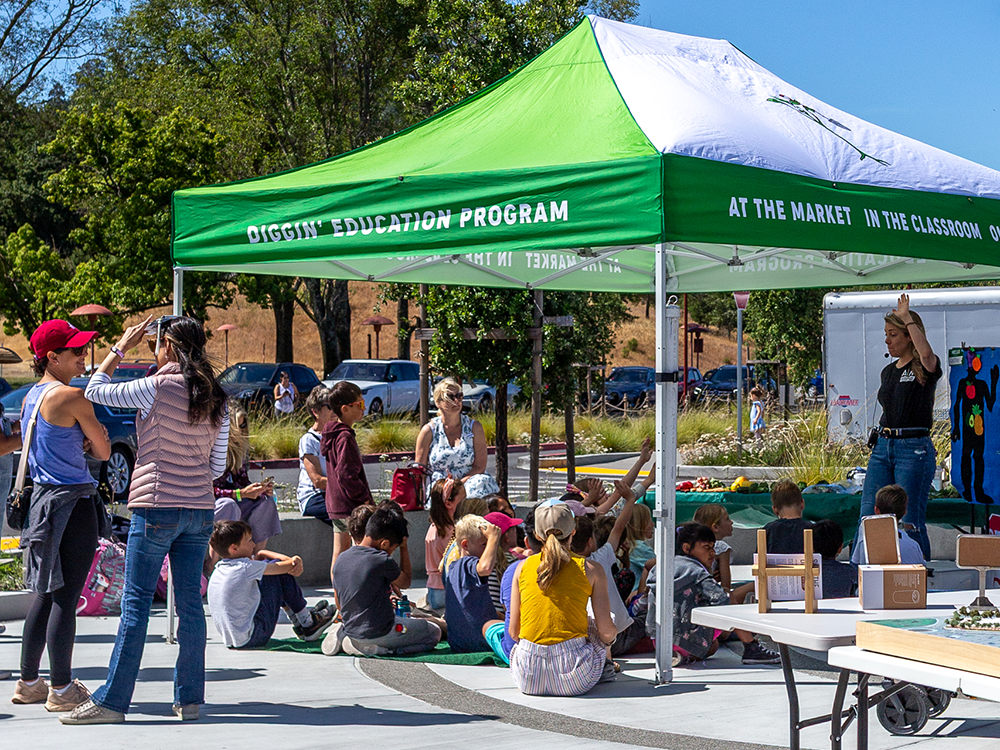
We lead farmers market tours, farm tours, and classroom visits. Sometimes students come to the farmers market, and sometimes we go to them. I work with kindergarteners through high school students, as well as adults and seniors, though a lot of our field trips are with second through fifth graders.
It is still education. It is still nutrition. It is still about health. But it allows me to support people in a different way while also keeping my private practice small and intentional.
Why Soil Health Matters
My work has expanded the way I think about health. At Bauman College, I learned the importance of a holistic approach to food and the body. At AIM, I think even bigger — we also need a holistic approach to the food system.
If we don’t have soil, we can’t grow food. And not just any soil — we need healthy soil.
Soil has a microbiome, just like our gut. Healthy soil is diverse. It has microbes, worms, bacteria, and all kinds of living organisms that help grow nutrient-dense food. Healthy soil also supports the environment by helping pull carbon from the air and store it in the ground.
That is why regenerative agriculture is so important. Practices like cover cropping, reducing tillage, and working with nature instead of against it can support soil health and, in turn, support the food we eat. To me, soil health, gut health, and community health are all connected.
My Advice, Start Local
When people ask where to begin, my number one tip is to shop local when you can.
Go to the farmers market if you have one nearby. In the Bay Area, we are lucky to have access to many farmers markets, but even if your local farmer is driving a few hours to get there, that is still different from produce that has traveled across the country or overseas.
When you shop locally, you are more likely to eat seasonally. Seasonal produce tastes better, often has more nutrients, and connects you to what is actually growing around you.
I always ask students — When was the last time you talked to the person who grew your food?
That relationship matters. There are so many labels out there — organic, regenerative, non-GMO — and it can feel overwhelming. But a simple first step is to buy local and seasonal when possible. Think about how long it has been from the tree to your belly. Was it six hours? Twelve hours? Or has that fruit or vegetable been in transit for weeks or months? That question can change the way you think about food.
What I Love Most About This Work
This work is fulfilling. I get excited to teach people simple ways they can support their health and wellness.
Whether I am working with a private client, leading a farmers market tour, teaching kids how to make loaded veggie quesadillas, or talking about soil microbes, the heart of the work is the same — helping people reconnect with food, their bodies, and the natural world.
We have gotten away from some of those simple practices — cooking with family, eating seasonally, shopping locally, and understanding where our food comes from. But those practices are powerful.
Holistic nutrition works. Local food systems matter. Soil health matters. Community matters.
Advice for Bauman Students and Future Nutrition Professionals
If I could give current students advice, I would say — put yourself out there. Talk about what you are learning. Share it with friends, family, people at the grocery store — anyone. Don’t be afraid to tell people what you are doing.
Community is everything. A lot of opportunities come from simply letting people know what you care about and how you can help.
I would also say to take the business section seriously. Don’t just treat it like an assignment. If you want to start a business, that work is an investment.
And finally, be yourself. On social media, in your business, in your teaching — let people see who you really are. You don’t need to spend hours making perfect graphics. Share your voice, your interests, your personality, and your values. People want to know there is a real person behind the practice.
Looking Ahead
I love the work I am doing now, and I am excited to keep growing. In the future, I would love to become even more involved in local food systems, whether that means working more closely with farmers, supporting community education, or maybe even exploring food policy.
I know I will continue to support clients through my private practice, but I also feel called to keep looking at the bigger picture. Our food system, our soil, our communities, and our health are all connected. The more we can work with nature instead of against it, the better.
Connect with Lauren
- Instagram: @laurenemersonwellness
- Private Practice: Lauren Emerson Wellness
- Podcast: Go Play in the Dirt
- Community Education: Agricultural Institute of Marin (AIM)
Have Work You Love
Learn more about Bauman College’s Online Nutrition Consultant and Holistic Chef Programs. Contact us to connect with an Admissions Representative today.