Content Summary
Chef Carrie Bonfitto, NC, BCHN, explores the culinary, agricultural, and therapeutic benefits of late summer abundance in this holistic breakdown of Savory Summer Corn & Zucchini Fritters with Lemon-Herb Cream. This seasonal recipe serves as a practical teaching moment for future holistic chefs, demonstrating how to build deep flavor, manage ingredient dynamics, and honor traditional foodways.
- The Agricultural Roots of Corn | Reconnecting with whole corn as an ancient staple crop of the “Three Sisters” planting tradition and understanding its place in a seasonal, whole-foods kitchen.
- Zucchini & Moisture Management | How to harness the hydrating, versatile nature of zucchini while mastering essential culinary techniques like salting and draining to achieve optimal texture.
- Flavor Building & Smart Pantry Substitutions | Creating balance using a nightshade-free profile of fresh herbs, citrus, and garlic paired with chickpea flour for a protein-rich, gluten-free binder.
- Core Lessons for the Holistic Chef | How seasonal, adaptative cooking bridges food history, functional nutrition, and the joy of nourishing culinary arts.
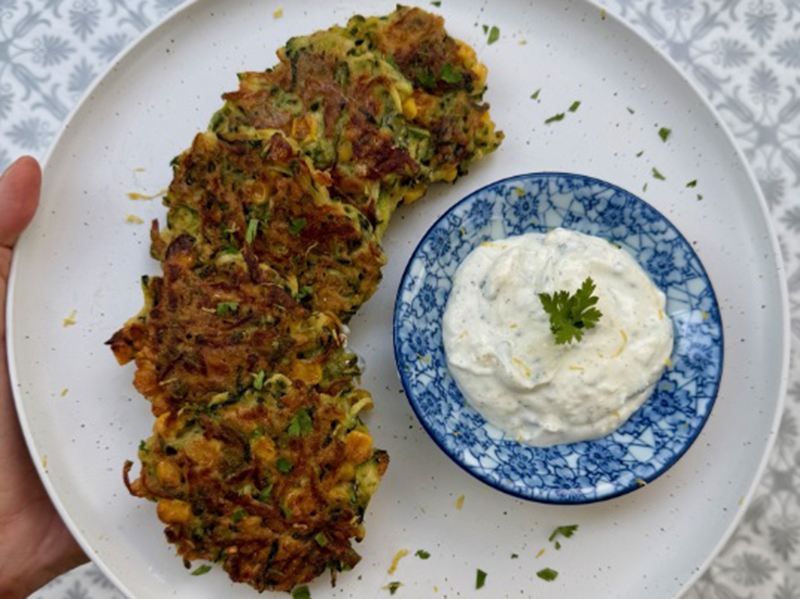

There is something deeply satisfying about cooking with the foods of late summer. The farmers market is full, the colors are bright, and the ingredients often need very little coaxing to become delicious. Fresh corn, zucchini, herbs, lemon, and a simple creamy sauce come together in our Savory Summer Corn & Zucchini Fritters with Lemon-Herb Cream, a dish that is humble, vibrant, and full of teaching moments.
For students exploring holistic cooking, this recipe is a beautiful example of what it means to cook seasonally, honor ingredients, and create food that is both nourishing and craveable.
Corn: An Ancient Crop with Deep Roots
Corn, also known as maize, has a long and significant agricultural history in North America. Long before corn became one of the most widely grown crops in the United States, Indigenous peoples cultivated maize as a staple food and cultural crop. Corn was often grown alongside beans and squash in the agricultural system known as the “Three Sisters,” a planting method in which the three crops support one another: corn provides a stalk for beans to climb, beans help enrich the soil, and squash spreads along the ground to help retain moisture and suppress weeds.
This way of growing food reflects a central principle of holistic cooking and farming: ingredients do not exist in isolation. They are part of relationships — with soil, climate, culture, community, and the body.
Over time, corn became deeply woven into the foodways of many communities across the Americas. It has been eaten fresh, dried, ground, boiled, roasted, fermented, and transformed into breads, porridges, tortillas, tamales, grits, and countless regional dishes. Today, corn remains one of the most important crops in the United States, though much of modern corn production is used for animal feed, ethanol, and processed food ingredients.
In a holistic kitchen, fresh summer corn gives us an opportunity to reconnect with corn as a whole food: sweet, juicy, golden, and full of seasonal flavor.
Why Fresh Corn Belongs in a Holistic Kitchen
Fresh corn offers natural sweetness, texture, and satisfaction. When enjoyed in its whole form, corn provides fiber, carbohydrates for energy, and a range of plant compounds. Its golden color comes in part from carotenoids, including lutein and zeaxanthin, which are often discussed for their role in supporting eye health.
Corn is also naturally gluten-free, making it a useful grain-like ingredient for cooks who want to create satisfying dishes without wheat. In these fritters, the corn adds bursts of sweetness and helps make the dish feel abundant without needing heavy ingredients.
The key is context. Whole, seasonal corn is very different from highly refined corn-derived ingredients. Holistic cooking asks us to look at the form, source, preparation, and balance of an ingredient — not just the ingredient name.
Zucchini: The Quiet Star of Summer
Zucchini is one of August’s most generous vegetables. It is mild, hydrating, and incredibly versatile. In this recipe, grated zucchini creates tenderness and moisture, while also adding fiber and volume.
One of the most important culinary lessons in this dish is learning how to handle zucchini’s water content. By salting and squeezing the grated zucchini before cooking, we prevent soggy fritters and create a better texture. This simple technique teaches students that good cooking is often about understanding the nature of an ingredient.
From a wellness perspective, zucchini is light yet satisfying. It pairs well with herbs, citrus, eggs, legumes, seeds, whole grains, and dairy or dairy-free sauces. Its gentle flavor makes it an ideal canvas for building a dish that feels fresh and balanced.
Herbs: More Than Garnish
Fresh herbs are one of the easiest ways to make healthy food taste exciting. Parsley, basil, dill, chives, and cilantro can all work beautifully in this recipe. Herbs bring brightness, aroma, color, and complexity without relying on heavy sauces or excessive salt.
In holistic cooking, herbs are often used both for flavor and for their traditional culinary roles in supporting digestion and overall vitality. Even in small amounts, they help awaken the palate. They also teach an essential chef skill: how to finish a dish so it feels alive.
A handful of chopped herbs can be the difference between a dish that tastes flat and one that feels vibrant.
Lemon, Garlic & Olive Oil: The Flavor-Building Trio
The lemon-herb cream in this recipe is simple, but it demonstrates one of the most important lessons in cooking: balance.
Lemon brings acidity and brightness. Garlic adds depth and savory aroma. Olive oil contributes richness and helps carry flavor. Together, they create a sauce that lifts the sweetness of the corn and the softness of the zucchini.
For students, this is a foundational lesson. A nourishing dish does not need to be complicated. Often, it needs the right balance of acid, fat, salt, and aromatics.
Chickpea Flour: A Smart Gluten-Free Binder
When made with chickpea flour, these fritters become especially useful for holistic cooking demonstrations. Chickpea flour helps bind the vegetables, adds structure, and contributes plant-based protein and fiber. Its savory flavor works well with cumin, coriander, herbs, and lemon.
It also introduces students to a broader pantry. Holistic chefs often learn to work with alternative flours, legumes, seeds, nuts, and whole-food ingredients that offer both culinary function and nutritional value.
A Nightshade-Free Seasonal Dish
This recipe is also nightshade-free, which means it avoids tomatoes, peppers, eggplant, paprika, cayenne, chili flakes, and white potatoes, which can be inflammatory for some people. Many summer recipes rely heavily on tomatoes and peppers for color and flavor, but this dish shows that seasonal cooking can still be bright and exciting without them.
Instead of nightshades, we build flavor through fresh corn, zucchini, herbs, lemon, garlic, cumin, coriander, and a cooling cream sauce. The result is colorful, satisfying, and approachable for a wide range of eaters.
What This Recipe Teaches Future Holistic Chefs
Savory Summer Corn & Zucchini Fritters may look simple, but they contain many of the skills that holistic chefs use every day:
- Cooking with the season
- Managing moisture in vegetables
- Building flavor without relying on processed ingredients
- Creating gluten-free structure
- Making a balanced sauce
- Adapting recipes for dietary needs
- Honoring food history and agricultural traditions
- Making nourishing food feel joyful and delicious
This is the heart of holistic cooking. It is not about restriction. It is about relationship — to ingredients, to the body, to culture, and to the pleasure of eating well.
A Taste of the Holistic Chef Program
In our Holistic Chef program, students learn how to create food that is beautiful, practical, seasonal, and deeply nourishing. Recipes like these corn and zucchini fritters are a gateway into bigger conversations: Where does our food come from? How do cooking techniques affect digestion, flavor, and texture? How can we adapt recipes to meet different needs without sacrificing joy?
Late summer gives us the perfect classroom. With a few ears of corn, a couple of zucchini, fresh herbs, and a skillet, we can explore history, technique, nutrition, and creativity — all on one plate.
Check out the featured recipe below or learn more about Chef Carrie Bonfitto, NC, BCHN® and the rest of the Holistic Chef Team by visiting our faculty page.
Savory Summer Corn & Zucchini Fritters with Lemon-Herb Cream
By Chef Carrie Bonfitto, NC, BCHN®
Yield | Approximately 12 Small Fritters
Time | 30-40 Minutes
Servings | 4 as a light meal or 8-12 as tasting portions
INGREDIENTS
Fritters
- 2 medium zucchini, grated
- 1 teaspoon sea salt, divided
- 1 cup fresh corn kernels, from about 1–2 ears of corn
- 2 scallions, thinly sliced
- 1/4 cup chopped fresh herbs, such as parsley, basil, dill, or chives
- 2 large eggs
- 1/2 cup chickpea flour, oat flour, or all-purpose flour
- 1 teaspoon baking powder
- 1/2 teaspoon ground cumin
- 1/2 teaspoon ground coriander
- 1/4 teaspoon black pepper
- Zest of 1 lemon
- 2–3 tablespoons olive oil or avocado oil, for cooking
Lemon-Herb Cream
- 1/2 cup plain Greek yogurt (or dairy-free cashew cream)
- 1 tablespoon fresh lemon juice
- 1 teaspoon lemon zest
- 1 tablespoon olive oil
- 2 tablespoons chopped fresh herbs
- 1 small garlic clove, finely grated or minced
- Sea salt, to taste
- Black pepper, to taste
INSTRUCTIONS
- Prepare the Zucchini
Place the grated zucchini in a bowl and toss with 1/2 teaspoon sea salt. Let it sit for 10 minutes to draw out excess moisture.
Transfer the zucchini to a clean kitchen towel or nut milk bag and squeeze firmly until as much liquid as possible is removed. This step helps the fritters become crisp instead of soggy. - Make the Lemon-Herb Cream
In a small bowl, whisk together the yogurt or cashew cream, lemon juice, lemon zest, olive oil, herbs, garlic, salt, and black pepper.
Taste and adjust with more lemon, salt, or herbs as needed. Set aside. - Mix the Fritter Mixture
In a medium bowl, combine the squeezed zucchini, corn, scallions, herbs, eggs, flour, baking powder, cumin, coriander, black pepper, remaining 1/2 teaspoon salt, and lemon zest.
Stir until the mixture holds together. It should be thick and spoonable. If it feels too wet, add 1–2 more tablespoons of flour. - Cook the Fritters
Heat a large skillet over medium heat. Add a thin layer of olive oil or avocado oil.
Scoop about 2 tablespoons of batter per fritter into the skillet and gently flatten with the back of a spoon.
Cook for 3–4 minutes per side, or until golden brown and cooked through. Work in batches, adding more oil as needed.
Transfer cooked fritters to a plate or sheet pan lined with a towel. - Plate and Serve
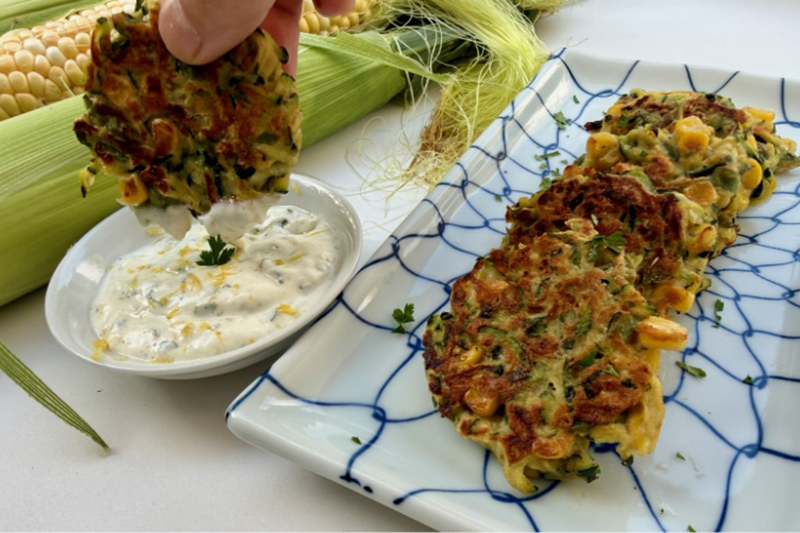
Serve the fritters warm with a spoonful of lemon-herb cream on top.
Garnish with fresh herbs, lemon zest, or a few toasted pumpkin seeds for extra texture.
Vegan Variations
- Dairy-Free
Use cashew cream or unsweetened coconut yogurt in the sauce. - Egg-Free
Replace the eggs with 2 flax eggs. Mix 2 tablespoons ground flaxseed with 5 tablespoons water and let sit for 10 minutes before adding to the batter. The texture will be softer but still delicious.
Have Work You Love
Learn more about Bauman College’s Online Nutrition Consultant and Holistic Chef Programs. Contact us to connect with an Admissions Representative today.