Content Summary
- Culinary Insight: Chef Michele Tedrick explains why she transitioned from store-bought dressings to homemade versions, highlighting the health benefits and superior flavor of whole-food ingredients.
- Educational Recipes: The post provides three versatile recipes—a Lemon Vinaigrette, a Dairy-Free Ranch, and an Asian-Inspired Citrus Vinaigrette—with a focus on cooking with ratios.
- Technical Skills: Chef Michele shares professional tips on emulsification and the “taste with intention” method used in the Holistic Chef program.
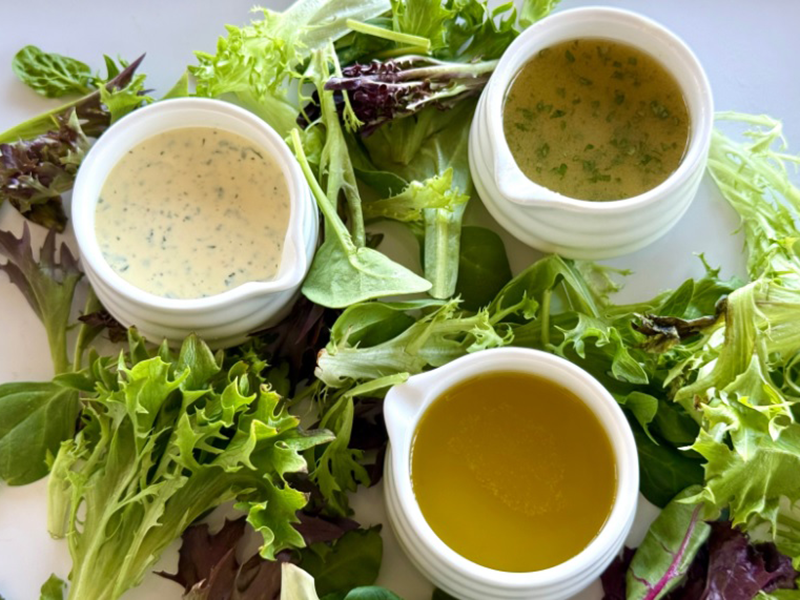
Walking down the salad dressing aisle, I’m always amazed by the sheer number of options—and how much shelf space is devoted to this convenience food. Take a closer look at the labels and you’ll often find unpronounceable ingredients, added sugars, gums, and dyes.
I used to search for the “least bad” option. But over time, something changed—I stopped liking them altogether.
That shift may have started during a stay with a family in Italy. Each evening, they served a simple mixed green salad dressed lightly with olive oil, salt, and pepper. That was it—no lineup of bottled dressings to choose from. It was simple, intentional, and surprisingly satisfying. That experience was a revelation.
Something else happened, too. Whenever I’d ask a friend who invited us for dinner, “What can I bring?” the answer was often, “a salad.” Wanting to make it special, I began creating my own dressings and experimenting with ingredients.
Now, I’m known in my social circle for my salads. I often hear, “Oh good—Michele brought one of her salads.” As a health coach and holistic chef, that means a lot. Helping people make better food choices—starting with something as approachable as a salad—is one of my goals.
Each week, I prepare a large salad or vegetable platter—enough to serve about 40 people—for a fellowship gathering. And over time, a few dressings have become clear favorites. So, I’m excited to share the recipes I’m most often asked for.
One-Minute Lemon Vinaigrette in a Jar
By Chef Michele Tedrick
This simple lemon vinaigrette comes together in seconds with a quick shake using pantry ingredients. It complements everything from delicate greens to more composed salads.
An easy ratio to remember:
- 1 part lemon juice
- 1/3 part Dijon mustard
- 2 parts extra virgin olive oil
- salt and pepper to taste
Once you learn this ratio, you can scale it up or down effortlessly by adjusting the amount of lemon juice. No measuring required. However, for clarity here’s what this might look like.
INGREDIENTS
- 1 tablespoon lemon juice
- 1/3 tablespoon = 1 teaspoon Dijon mustard
- 2 tablespoons extra virgin olive oil
- salt and pepper to taste
The amount of lemon juice will determine the amount of the rest of the ingredients.
Tip: If you’re out of lemons, apple cider vinegar makes a great substitute.
This is one of my favorite “no-recipe” recipes. Cooking with ratios is a foundational skill taught in courses like Foundational Ingredients and Pastry Arts and Alternative Baking in the Holistic Chef Program.
The Best Mayonnaise-Based Dairy-Free Ranch Dressing
By Chef Michele Tedrick
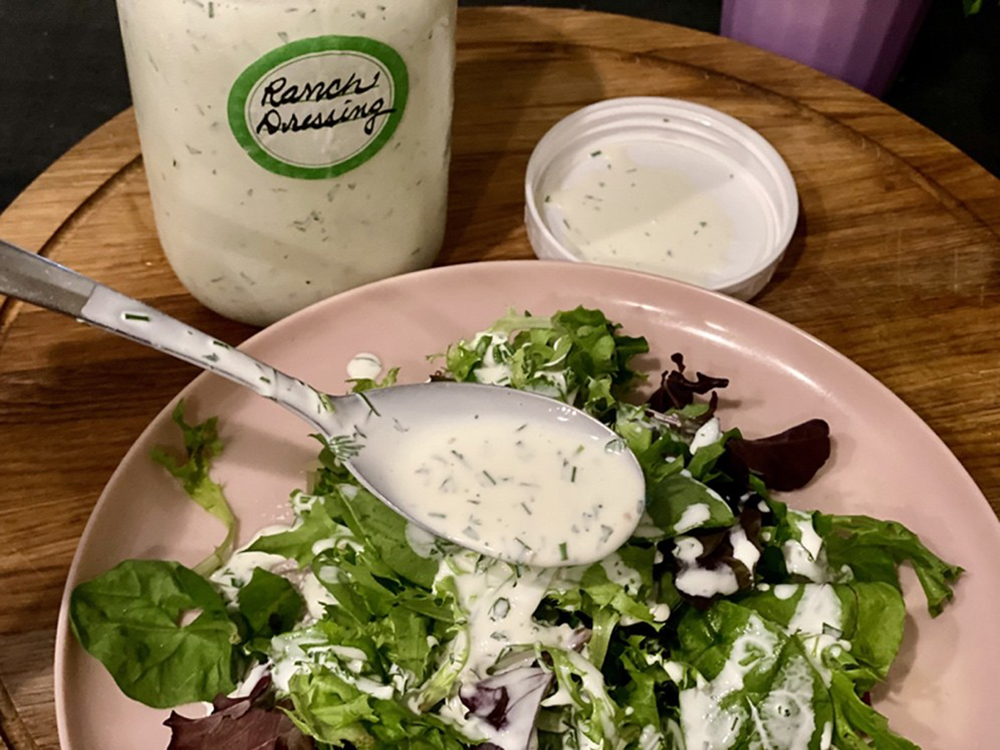
Ranch is the most popular salad dressing in the United States, originally created at a California dude ranch. I often wonder what that first version tasted like—perhaps made with fresh, simple ingredients sourced right from the ranch. This version is a favorite among my friends who avoid dairy, and it consistently disappears at our gatherings.
INGREDIENTS
- 1 1/2 cups mayonnaise (olive oil or avocado oil–based)
- 1/8–1/4 cup almond milk (or dairy-free milk of choice), to desired consistency
- 1/2 teaspoon Dijon mustard
- 1 garlic clove, pressed or minced
- 1/8 cup fresh dill, finely chopped
- 1/8 cup flat-leaf parsley, finely chopped
- 1/8 cup chives, finely chopped (optional)
- 1 tablespoon fresh lemon juice
- 1/2 teaspoon salt, or to taste
- 1/4 teaspoon freshly cracked black pepper, or to taste
INSTRUCTIONS
- Mix all ingredients in a bowl or jar with a lid.
- Adjust seasoning to taste. For best flavor, refrigerate before serving to allow the ingredients to meld.
Parsley, dill, garlic, chives, lemon juice, and Dijon create that classic herb-forward ranch flavor—without the dairy.
Students explore the health benefits of these ingredients throughout the Holistic Chef program, especially in the Cooking for Health course, and can dive deeper through the Nutrition Consultant Program.
Asian-Inspired Citrus Vinaigrette
By Chef Michele Tedrick
This vibrant vinaigrette delivers bright citrus notes with umami depth, along with ingredients known for their health-supportive properties—like citrus zest, cilantro, ginger, and garlic. It pairs beautifully with proteins like chicken, fish, pork, or tofu—anything you’d like to give an Asian-inspired flair.
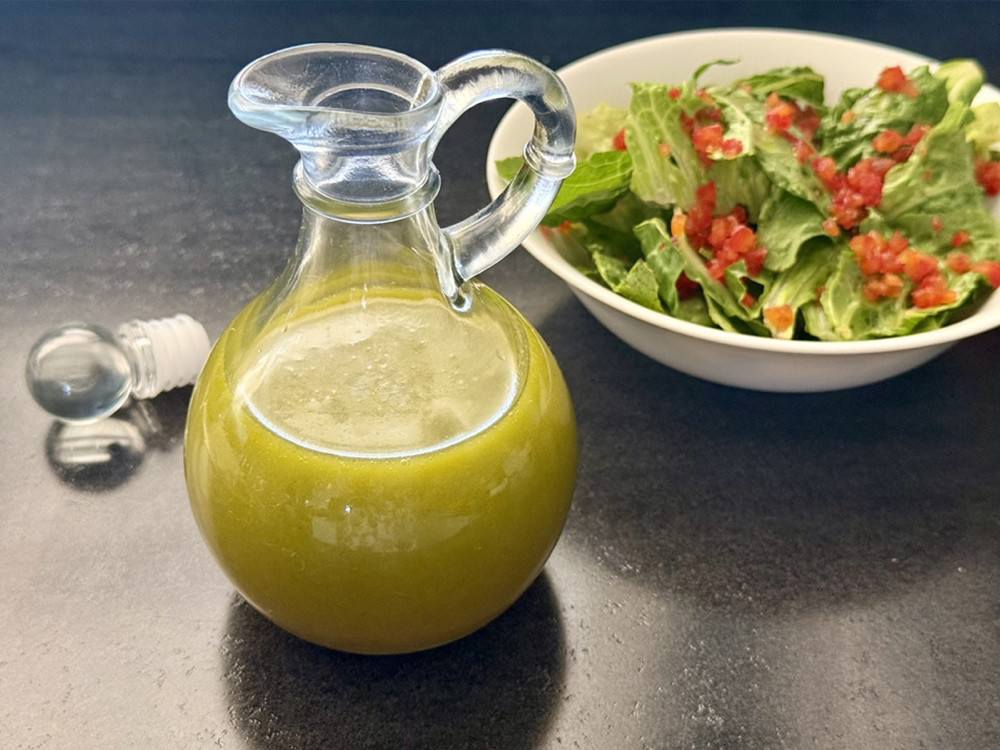
INGREDIENTS
- zest of 1 lemon and 1 orange
- 3 tablespoons red pepper, finely minced
- 2 tablespoons honey
- 2 teaspoons fresh ginger
- 2 teaspoons Dijon mustard
- 2 cloves garlic, creamed into a paste
- 1 teaspoon low-sodium tamari
- pinch of white pepper, to taste
- 1/3 cup fresh citrus juice (lime and orange)
- 2/3 cup cilantro oil (see below), or substitute extra virgin olive oil
- salt to taste
Cilantro Oil (Optional but Recommended)
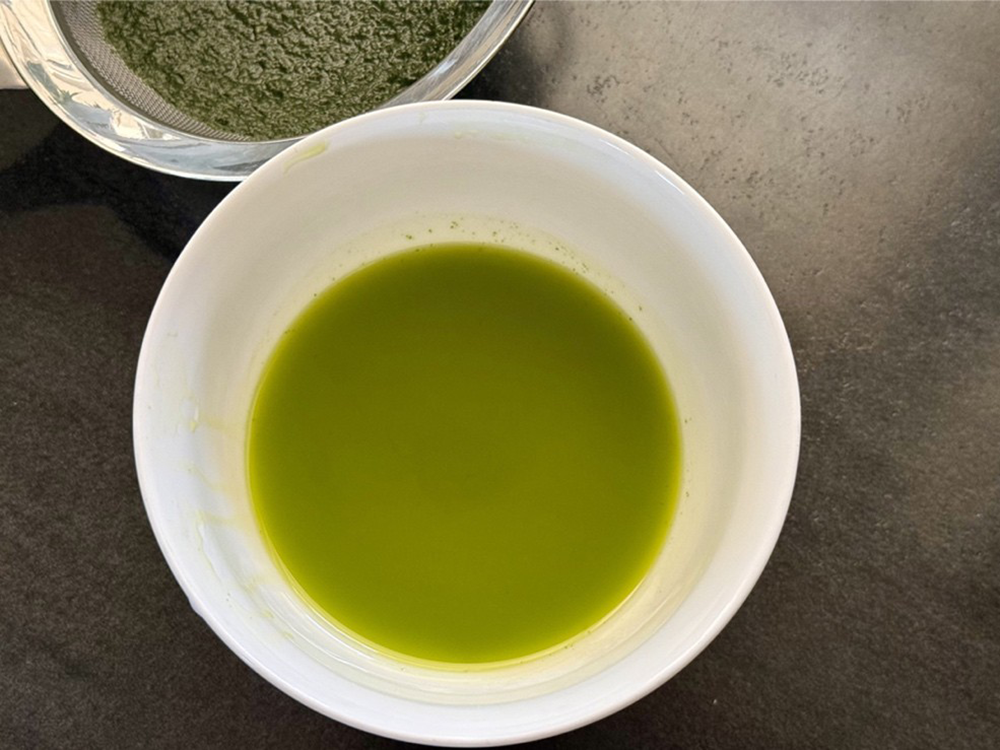
INGREDIENTS
- 1 bunch cilantro (about 1 cup, stems trimmed)
- 1 cup extra virgin olive oil
INSTRUCTIONS
- Blend until smooth, then strain through a fine mesh sieve without pressing.
- Store in the refrigerator and bring to room temperature before use.
Tip: Freeze the strained solids for use in soups or stews.
Variations: Try parsley, Thai basil, or a blend.
Note: Some people perceive cilantro as soapy due to genetics. Crushing the leaves in the oil can help soften that flavor while preserving the nutrients.
To Shake or to Whisk—That is the Question
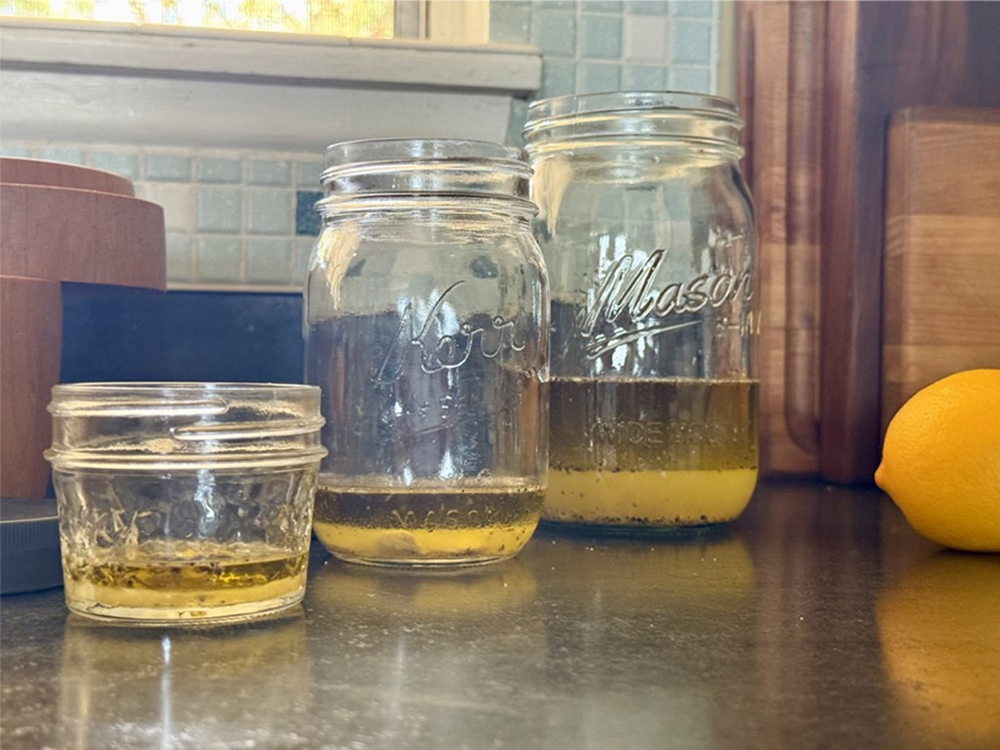
You can absolutely make this dressing by shaking everything in a jar—perfect for quick, everyday use.
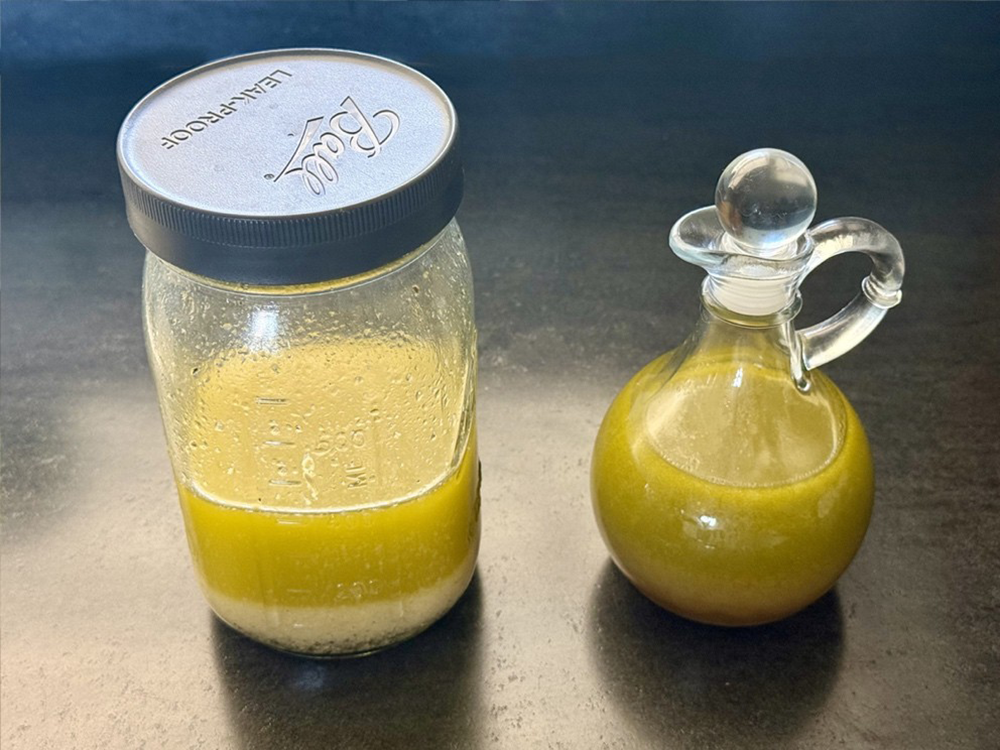
However, for serving guests or preparing ahead, a fully emulsified vinaigrette creates a better experience. It stays cohesive for longer, ensuring each bite is balanced rather than separating into oil and acid.
Emulsification works by slowly incorporating oil into the acid while whisking, with Dijon mustard acting as a natural emulsifier.
The following image shows the difference between shake-in-a jar vs emulsified. After one hour the shaken vinaigrette was completely separated while the emulsified version was still holding together.
How to Fully Emulsify This Vinaigrette
In a bowl, combine half the zest (you can add more later when tasting), red pepper, honey, ginger, mustard, garlic, tamari, white pepper, and citrus juice.
Begin whisking while adding just a few drops of oil at a time. This stage requires patience—adding oil too quickly will prevent proper emulsification.
Continue slowly, whisking consistently. As the mixture thickens, you can gradually increase the flow of oil.
For this quantity, achieving a thick, stable emulsion may take up to 20 minutes. This technique is taught in the Holistic Chef program and is a valuable skill for any home cook.
Final Pro Tip: Taste with Intention
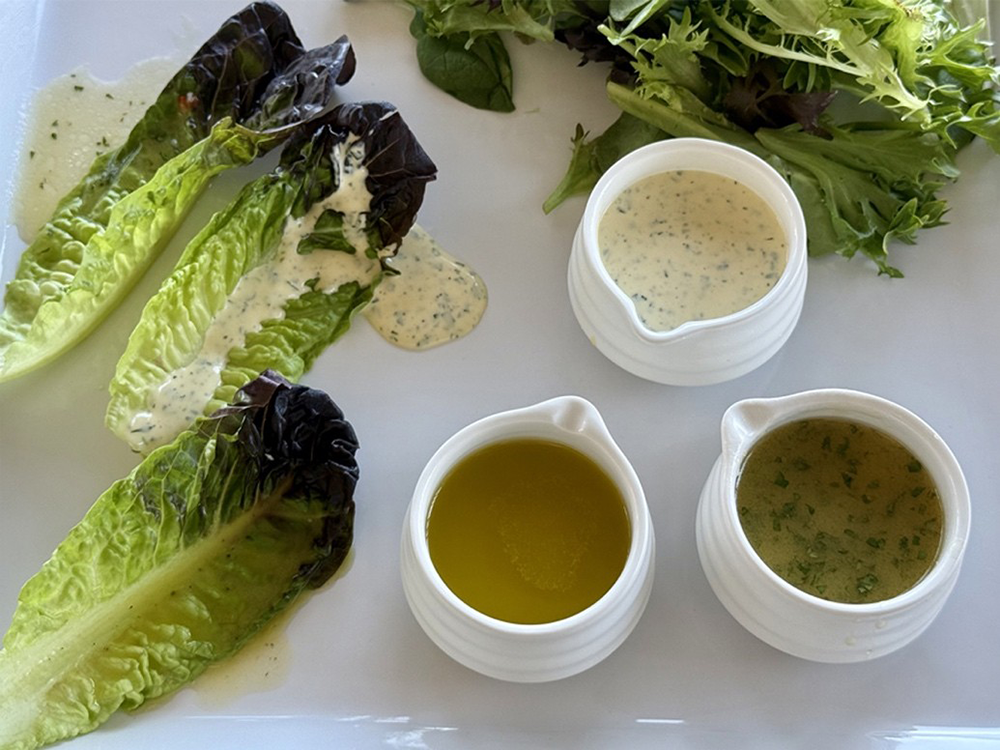
One of the most valuable skills taught in the Holistic Chef program is learning to taste and adjust as you go.
When making salad dressings, the best way to evaluate flavor is to dip a piece of lettuce into the dressing rather than tasting it on its own. This gives you a more accurate sense of how the dressing will actually taste when eaten.
From there, adjust as needed—whether it’s a pinch of salt, a crack of pepper, or a bit more lemon juice to brighten the flavor.
Homemade vs Store-Bought Dressings
Homemade dressings made with high-quality ingredients simply taste fresher and more vibrant than store-bought versions. Once you start making your own, it’s hard to go back.
And don’t be surprised if your friends start asking for your recipes—I certainly didn’t expect to become “the salad person,” but I’ll happily take that title.
About Michele Tedrick
Michele is a National Board-Certified Health and Wellness Coach (NBC-HWC), an ADAPT Certified Functional Health Coach (A-CFHC), and a certified Holistic Chef through Bauman College. As an alumna and current Teaching Assistant at Bauman College, she supports students in developing both culinary skills and a deeper understanding of nutrition..
Connect with Michele:
- Instagram | @nutrivorelife
- Facebook | Nutrivore Life
- Website | NutrivoreLife.com
Have Work You Love
Learn more about Bauman College’s Online Nutrition Consultant and Holistic Chef Programs. Contact us to connect with an Admissions Representative today.